
1 hr 30 min
Lake Tekapo Dark Sky Stargazing
Explore the cosmos from a pristine Dark Sky Reserve with telescopes, mythology, and marshmallows
Reserve
Hand-picked by our editors — only the best 5 stargazing experiences from 17 reviewed.
Verified partners for every tour, free cancellation where available, and instant confirmation on every booking.
1 hr 30 min
Explore the cosmos from a pristine Dark Sky Reserve with telescopes, mythology, and marshmallows
Reserve
1 hr 15 min
Explore the southern night sky with high-powered telescopes in one of Earth's darkest locations
Reserve
1 hr 45 min
Journey to a world-class observatory summit for telescope viewing and guided exploration of the southern sky
ReservePrices from verified partners. Availability updates in real time at checkout. Free cancellation policies apply where shown.
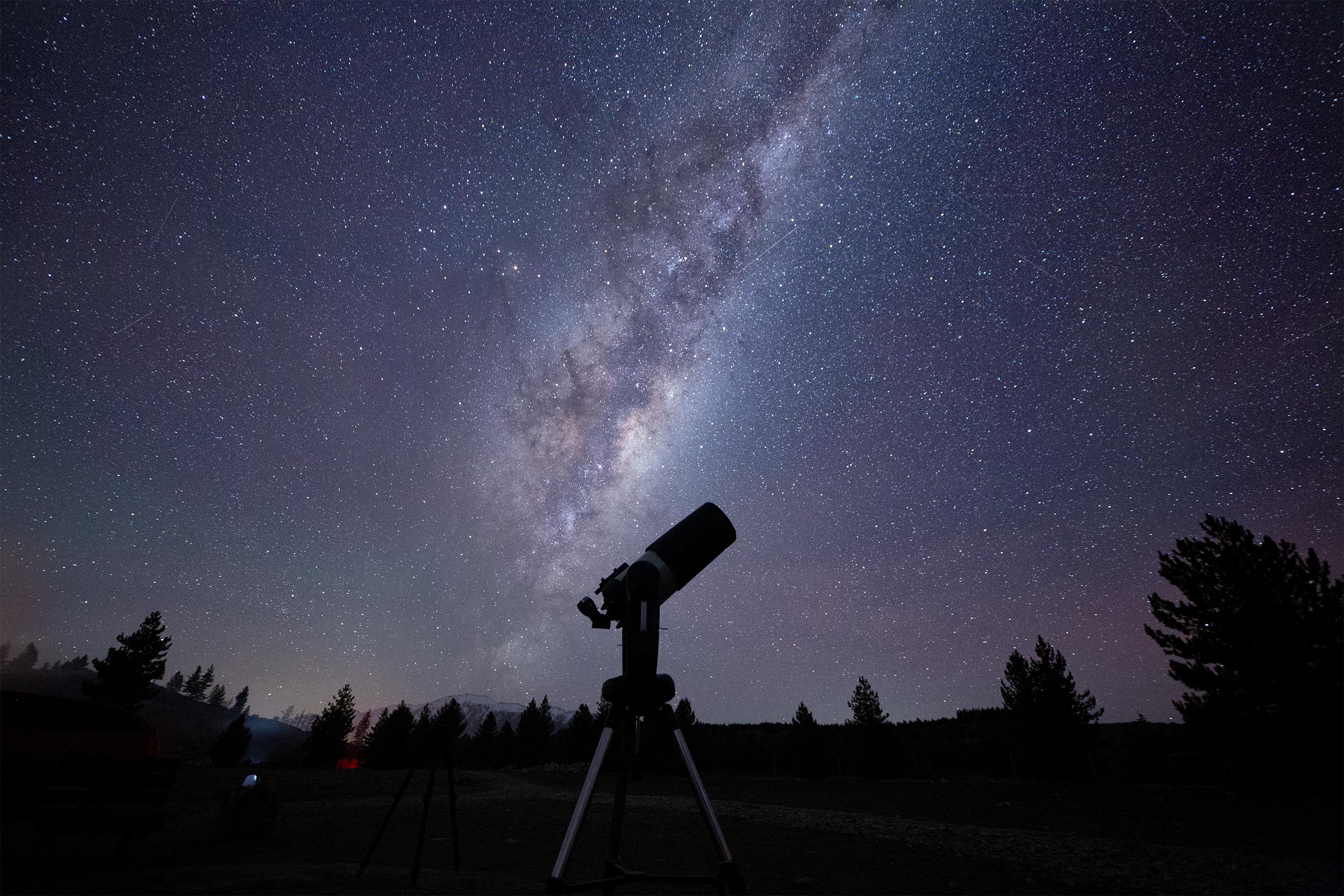
The landmarks, rooms, and views travelers on this tour remember — all visible on a single visit.
This 1.8-meter telescope is the largest in New Zealand and is a primary tool for detecting distant planetary systems.
They complement each other; most visitors who do both find the high-altitude research site superior for daytime vistas, while the sheltered crater base provides a more intimate environment for night sky observations. Securing mount john observatory tour tickets allows you to explore an active scientific facility, whereas the smaller, focused site offers an alternative perspective on the Aoraki Mackenzie International Dark Sky Reserve.
| Feature | Top pick Mount John Observatory | Cowan's Observatory |
|---|---|---|
Altitude |
1,029 meters above sea level | 720 meters above sea level |
Accessibility |
Private road access to summit | Easily accessible from town center |
Sky Quality |
Dark Sky Reserve summit | Dark Sky Reserve base location |
Wind Protection |
Exposed hilltop location | Sheltered crater environment |
Scenic Day Views |
Panoramic 360-degree vistas | Limited local ground views |
| See tickets → |
Verdict: Opt for a mount john observatory tour tour if you prioritize peak elevation and scientific context, or choose the rival for a protected setting that minimizes mount john observatory tour tours wind interference during observation.
Choose your ticket, select your date, and reserve in under two minutes. Secure checkout handled by our verified partner.
Instant confirmation by email, with a mobile voucher you can save offline. No printing, no queuing at a collection desk.
Arrive at the entrance, show your voucher on your phone, and walk in. Most tickets include priority or skip-the-line access.
Practical details for your visit straight from our verified partners — hours, access, rules, and how to get there.
Sturdy, closed-toe footwear is required for walking on uneven terrain during a mount john observatory tour. We highly recommend multiple warm layers, including a thermal base, jacket, and hat, as summit temperatures drop significantly at night.
Standard backpacks are permitted during the day. For evening tours, avoid bulky items that may impede movement near research equipment.
Daytime visitors enjoy panoramic views of the Mackenzie Basin. Please note that flash photography is prohibited during evening night sky viewing sessions to protect dark-adapted vision.
While the summit offers paved areas, some parts of the observatory grounds feature uneven surfaces. The private road access is the primary method for most visitors.
The mount john observatory tour is suitable for older children, though please check specific age requirements for evening stargazing activities. Families often enjoy the daytime walk as a scenic alternative to driving.
The Astro Cafe at the summit provides daytime refreshments with 360-degree views. No food or beverage services are available during private nighttime observatory tours.
Best time to go, insider tips, nearby landmarks, and the cancellation fine print — flip through to skim what matters to you.
Flexible, no hidden fees.
Full refunds are typically available for weather-canceled night tours. Please refer to your specific booking confirmation for exact windows regarding your mount john observatory tour tickets.
Mount John Observatory sits 1,031 metres above Lake Tekapo, anchored to a summit that records fewer than 50 cloudy nights each year. The University of Canterbury established the research station in 1965, drawn by the Mackenzie Basin's combination of high altitude, stable air, and near-zero light pollution. What began as a single 16-inch Boller & Chivens telescope has grown into New Zealand's premier optical research facility, housing six instruments under the clearest skies in the Southern Hemisphere. In 2012, the International Dark-Sky Association awarded the surrounding Aoraki Mackenzie region Gold Tier status, a designation held by fewer than twenty sites worldwide. Mount John Observatory tours now bridge the gap between working astronomy and public access. The facility operates as a live research station — photometric surveys, exoplanet studies, and spectroscopic observations continue nightly — while guided stargazing sessions allow visitors to view the Magellanic Clouds, the Southern Cross, and Jupiter's moons through research-grade optics. The summit's 360-degree vantage spans the turquoise expanse of Lake Tekapo to the west and the snow-draped peaks of the Southern Alps to the north. Daytime access includes the Astro Cafe, a hexagonal structure clad in copper that commands unobstructed views across the basin. The cafe operates from 09:00 to 17:00 daily, accessible via a private gravel road that climbs 300 vertical metres in eight kilometres. The observatory's telescopes include the MOA (Microlensing Observations in Astrophysics) 1.8-metre reflector, the largest optical instrument in New Zealand, and the BOOTES-3 robotic system, which tracks gamma-ray burst afterglows in coordination with satellites. Night sky tours depart from the base station in Lake Tekapo village, guided by astronomers who tailor commentary to seasonal visibility. Winter months favour the Eta Carinae Nebula and the Jewel Box Cluster; summer brings Alpha Centauri low on the horizon. Vehicle access to the summit requires an 8 NZD conservation fee, collected at the entry gate on Godley Peaks Road. The road closes at sunset for research operations, reopening for pre-booked stargazing groups after astronomical twilight.
"Fewer than fifty cloudy nights each year, and skies darker than 95 percent of the inhabited world."
A step-by-step walkthrough of the visit — what you'll see, how long each stage takes, and the details that matter.
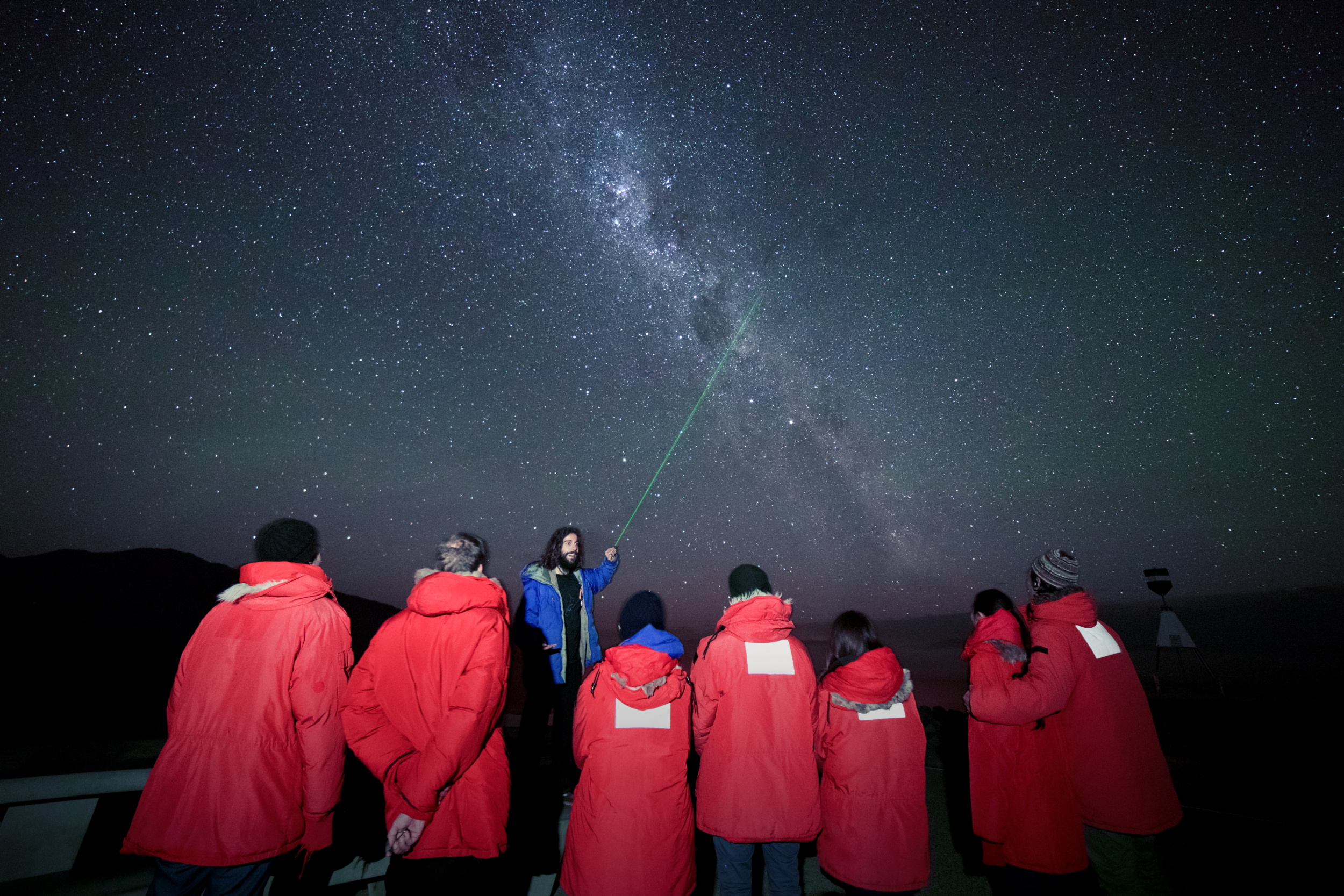
You begin at the base of Godley Peaks Road, where the summit track splits from State Highway 8 on the western edge of Lake Tekapo village. The private gravel road climbs steeply through tussock-covered slopes, switchbacking eight kilometres to the observatory plateau. You pass the entry kiosk — 8 NZD vehicle fee — and continue upward, the lake shrinking to a turquoise ribbon below. At the summit car park, you step into wind that carries no scent but cold air and high-altitude stillness. The Astro Cafe occupies the highest structure, its copper-clad hexagon cantilevered over the slope. You order flat whites and almond cake, then carry your tray to the outdoor terrace where the Southern Alps fill the northern skyline. Below, lupins stain the lakeshore violet. If you've booked an evening stargazing session, you return after sunset — the road reopens only for guided groups. Your astronomer sets up a Dobsonian telescope on the gravel apron, aligning it with the Coal Sack Nebula. You crouch to the eyepiece and see not stars but their absence, a black wound in the Milky Way's spine. The MOA dome rotates behind you, tracking objects too faint for human eyes.
The Mount John Observatory is open 09:00–17:00 daily for daytime access. Nighttime visits require a separate guided booking.
A road access fee of 8 NZD per vehicle is required for the private road leading to the summit.
Yes, nighttime access to the Mount John Observatory is strictly limited to guests on professional, guided stargazing tours.
The best arrival window is 09:00–16:00 to ensure access to the Astro Cafe and views before sunset road closures.
Children are generally welcome, but please check the specific age guidelines for your selected mount john observatory tour.
Accessibility at the summit can be challenging due to uneven terrain; please contact the operator for specific mobility assistance for your mount john observatory tour.
Pets are not permitted at the summit or within the observatory grounds at any time.
The Astro Cafe at the summit serves snacks and drinks during daytime operating hours.
Yes, it is highly recommended to purchase mount john observatory tour tickets online in advance to guarantee your spot.