
1 hr 30 min
Lake Tekapo Dark Sky Stargazing
Gaze at constellations through high-powered telescopes in one of the world's premier dark sky reserves
Reserve
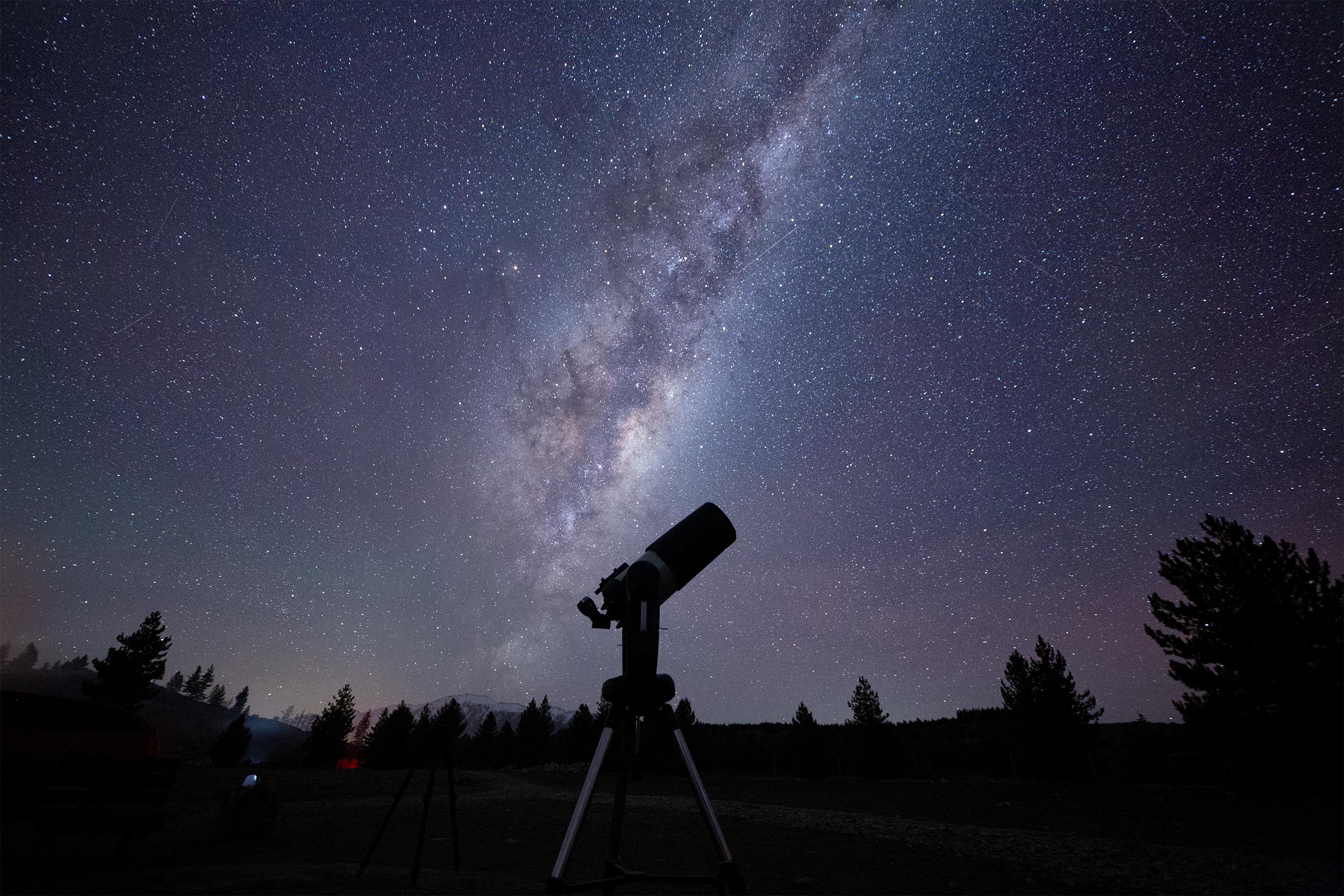
Hand-picked by our editors — only the best 5 stargazing experiences from 12 reviewed.
Verified partners for every tour, free cancellation where available, and instant confirmation on every booking.
1 hr 30 min
Gaze at constellations through high-powered telescopes in one of the world's premier dark sky reserves
Reserve
1 hr 15 min
Explore the cosmos from one of Earth's darkest skies with professional telescopes and expert guidance
Reserve
1 hr 45 min
Journey to a pristine observatory summit in one of Earth's finest dark sky reserves for guided celestial viewing.
ReservePrices from verified partners. Availability updates in real time at checkout. Free cancellation policies apply where shown.
The landmarks, rooms, and views travelers on this tour remember — all visible on a single visit.
This 1.8-metre telescope is central to international research on microlensing and distant solar systems. It remains a primary instrument for professional astronomical study at the site.
MOA Telescope
Astro Café
Summit Circuit Track
Dark Sky Reserve
HERCULES Spectrograph
Mount John Observatory provides panoramic high-altitude views during the day, while Cowan's Observatory focuses exclusively on private guided stargazing experiences. Securing mount john observatory tickets tours is ideal for daytime scenery, whereas Cowan's offers a more intimate nocturnal perspective of the southern sky.
| Feature | Top pick Mount John Observatory | Cowan's Observatory |
|---|---|---|
Primary Focus |
Panoramic daytime views and research | Dedicated stargazing and astronomy education |
Access/Road Type |
Private summit road | Public access road near town |
Altitude Advantage |
High mountain elevation | Low-lying valley location |
Stargazing Capacity |
Research-grade instrumentation | Guided small-group telescope observation |
Daytime Accessibility |
Open daily 09:00–16:00 | Closed during daytime hours |
| See tickets → |
Verdict: Visitors seeking a mount john observatory tickets tour enjoy the expansive landscape vistas, while those wanting a specialized night sky mount john observatory tickets tickets alternative should select Cowan's Observatory.
Choose your ticket, select your date, and reserve in under two minutes. Secure checkout handled by our verified partner.
Instant confirmation by email, with a mobile voucher you can save offline. No printing, no queuing at a collection desk.
Arrive at the entrance, show your voucher on your phone, and walk in. Most tickets include priority or skip-the-line access.
Practical details for your visit straight from our verified partners — hours, access, rules, and how to get there.
Wear warm, layered clothing regardless of the season, as high-altitude winds can drop temperatures significantly. Sturdy, closed-toe footwear is essential for walking on the summit's uneven gravel terrain.
Keep all personal belongings with you at all times while exploring the observatory grounds. Security is maintained on-site to protect sensitive research equipment and the surrounding dark sky environment.
Photography is encouraged during the day for personal use, especially from the café terrace. Avoid using flash or bright lights near telescope domes if visiting as part of an organized night tour.
The summit area features gravel paths that may be challenging for those with limited mobility. Please contact the tour operator in advance if you have specific accessibility needs for mount john observatory tickets tours.
Families are welcome to visit during the day, though stargazing tours often have a minimum age requirement of 10 years. Ensure children stay within designated public areas near the café and marked tracks.
The Astro Café is located at the summit and offers a range of light meals, coffee, and refreshments. It is the only place to purchase food on the mountain, so plan your mount john observatory tickets tour accordingly.
Best time to go, insider tips, nearby landmarks, and the cancellation fine print — flip through to skim what matters to you.
Flexible, no hidden fees.
Full refunds are typically provided for guided tour cancellations initiated by the operator due to weather. Please check your specific mount john observatory tickets booking voucher for detailed terms regarding the 8 NZD entrance road fee.
Mount John Observatory sits 1,031 metres above Lake Tekapo, the highest university-operated astronomical research facility in New Zealand and the anchor of the Aoraki Mackenzie International Dark Sky Reserve — one of only four Gold-tier reserves certified worldwide by the International Dark-Astronomical Association. Established in 1965 by the University of Canterbury, the summit station was chosen for its atmospheric stability, low light pollution, and the Southern Hemisphere's clearest view of the Magellanic Clouds, galaxies visible only below the equator. The MOA (Microlensing Observations in Astrophysics) telescope here contributed to the first optical detection of a gravitational microlensing event in 2005, confirming Einstein's prediction that massive objects bend light from distant stars. Today the observatory hosts five research-grade telescopes and serves dual roles: a working science facility publishing dozens of peer-reviewed papers annually, and a public outreach site offering guided night-sky tours under conditions so dark that the Milky Way casts shadows. The 8 NZD vehicle access surcharge funds maintenance of Godley Peaks Road, a private gravel track that climbs 300 vertical metres through tussock-covered slopes where kea — alpine parrots endemic to New Zealand's South Island — patrol for dropped food near the carpark. Daytime visitors access the Astro Café, a glass-walled structure cantilevered over the lake basin, serving locally roasted coffee and house-baked goods while framing Aoraki/Mount Cook 100 kilometres to the southwest. Mount John Observatory tickets grant access to the summit precinct between 09:00 and 16:00; evening stargazing programs operate separately under commercial permits, limiting light spill and preserving the research environment after dark. The reserve's Gold certification requires light pollution levels below 1 millicandela per square metre — a threshold the Mackenzie Basin maintains through council ordinances mandating full-cutoff fixtures and amber LED streetlights in Tekapo township. On moonless nights the naked-eye star count exceeds 4,000, compared to fewer than 200 visible from urban centres. Observatory tours include access to the McLellan telescope, a 61-centimetre Boller & Chivens reflector used for variable star photometry, and views through the coude focus of the 1-metre MOA telescope when research schedules permit. The summit's micro-climate averages 300 clear nights per year, a stability index surpassed in the Southern Hemisphere only by Chile's Atacama Desert observatories at significantly higher cost and elevation.
"On moonless nights the naked-eye star count exceeds 4,000, compared to fewer than 200 visible from urban centres."
A step-by-step walkthrough of the visit — what you'll see, how long each stage takes, and the details that matter.
You leave State Highway 8 at the Tekapo township junction and follow the signposted gravel turn onto Godley Peaks Road, stopping at the unmanned toll station to pay the 8 NZD vehicle surcharge — cash or card, collected via a self-service kiosk. The road climbs steeply through open tussock, switchbacking twice before the gradient eases near the ridgeline. Kea often gather near the final bend, their olive-green plumage and orange underwings unmistakable against the pale gravel. You park in the all-weather lot 50 metres below the observatory domes and walk the remaining incline to the summit plaza, where interpretive panels explain the research telescopes and the International Dark Sky Reserve designation. The Astro Café occupies the western edge of the precinct, floor-to-ceiling windows framing Lake Tekapo 300 metres below, its glacial turquoise striking against the bare hills. You order at the counter — the carrot cake and flat whites earn consistent praise — and claim a window seat. On clear days Aoraki/Mount Cook's 3,724-metre summit appears as a distant white pyramid beyond the Mackenzie plains. Before descending you circle the perimeter path, a five-minute loop past the MOA dome and the smaller McLellan telescope housing, both active research instruments closed to casual entry but visible through fenced viewing areas. The return drive takes twelve minutes; most visitors depart by 15:30 to avoid afternoon tour-bus traffic on the narrow descent.
The observatory grounds and road are open from 09:00–16:00 daily.
Entrance for vehicles to the private summit road is 8 NZD per vehicle. Guided tours have separate pricing found on the official site.
Yes, you can drive to the top of Mount John during the 09:00–16:00 opening window, subject to the 8 NZD road surcharge.
The best arrival window is 09:00–15:00, providing the clearest weather for panoramic views before the road closes.
Some guided stargazing tours require participants to be at least 10 years old. Check specific booking details for your mount john observatory tickets tour.
Daytime photography is permitted; however, night tours have strict rules regarding lights and flashes to protect the dark sky environment.
In the event of unsuitable weather, the operator often provides an indoor alternative or a rescheduling option for your mount john observatory tickets visit.
You can purchase refreshments at the Astro Café, but please carry out any trash you generate during your visit.
The summit terrain is uneven gravel, making it difficult for standard wheelchairs. Contact the operator to discuss specific accessibility options.
You can book mount john observatory tickets online via the official website or approved tour partners.